

Miðsumar
The calendar's sixth holiday.

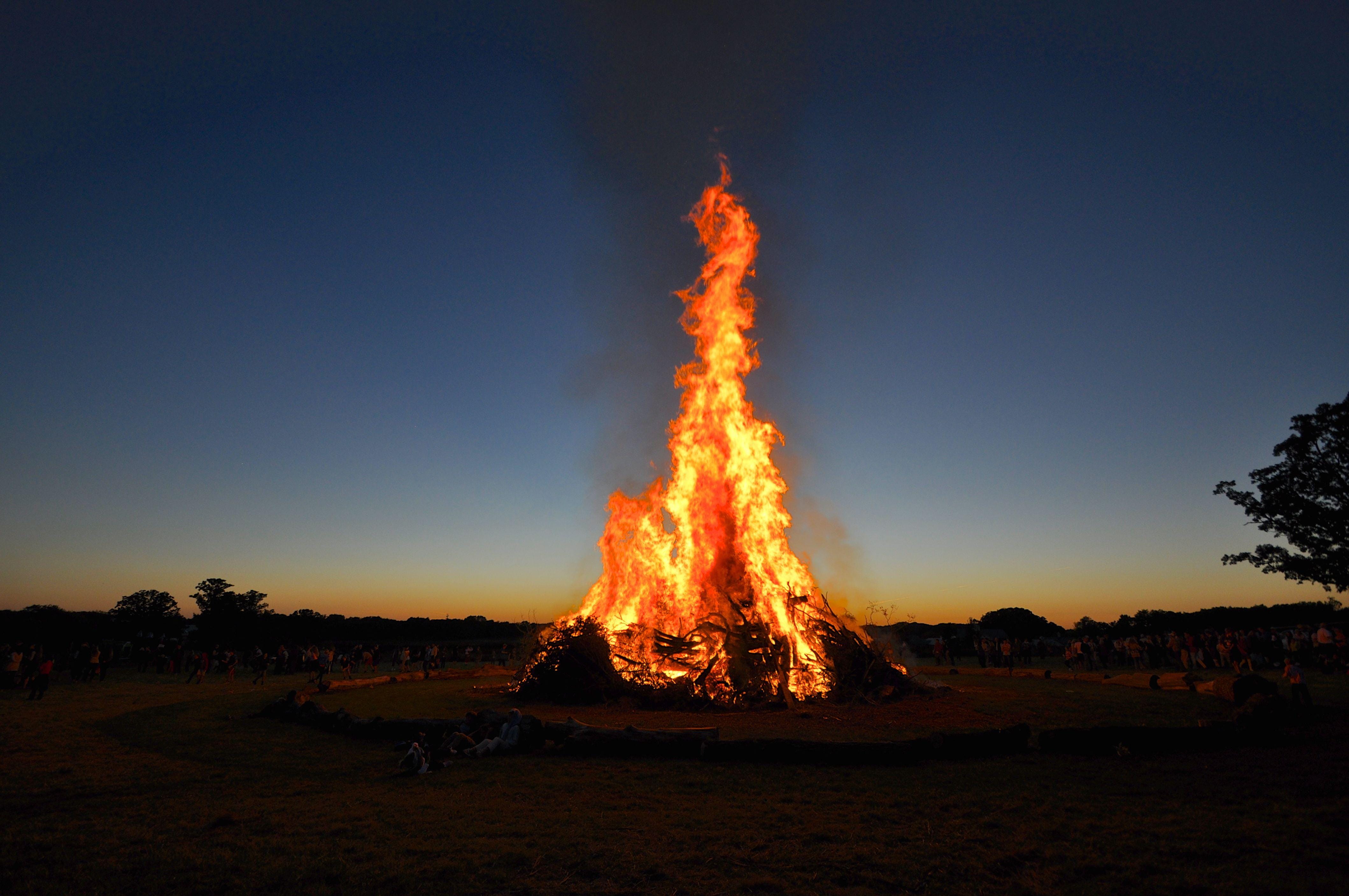
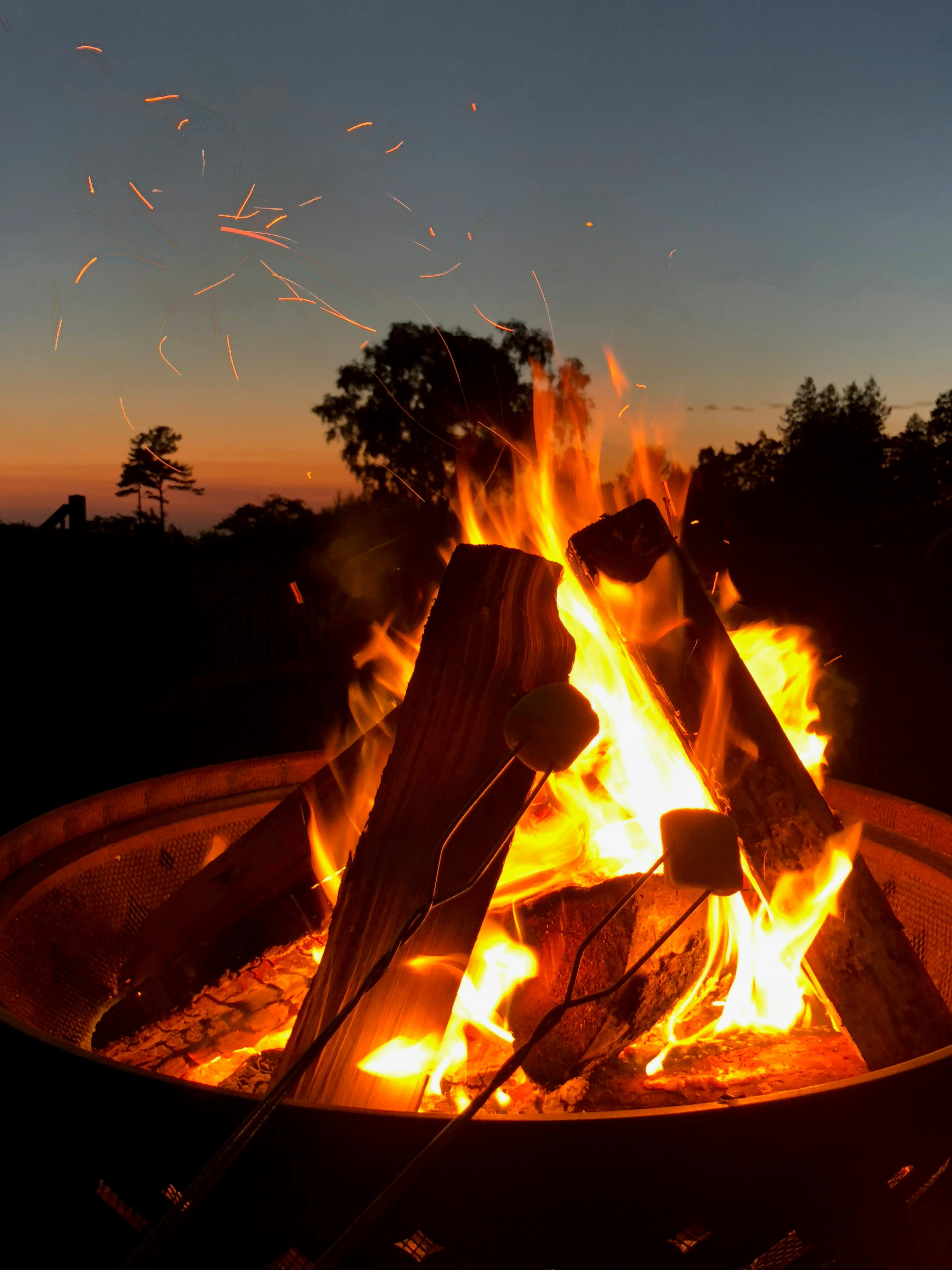
Miðsumar is the June holiday. It’s the longest day of the year, and a celebration of the triumph of the sun. It’s part of the Nornanótt-Sumarmál-Miðsumar complex of holidays, and as such fires and bonfires are common. Burning a sunwheel is also a practice done at the hofs. In the Agricultural Cycle, the seeds have been planted, have sprouted, and now are tended. This is a period of fun and merriment, but also of watchfulness. The goals of the year are in swing.
This is also the one of the simplest of our holidays in terms of ritualisms, because the rite itself is ultimately to be part of your Folk, gather with them, and live joyfully. To that end, this article will be short, because I don’t actually want you, the reader, to sit here reading about this holiday: I want you to go to DM us on here, or go to the bottom of our website’s contact page (https://www.runestone.org/), or DM us on Xwitter, or whatever, and reach out, and get in touch with your local Folkbuilder so that you can join us around the bonfire.
So about the name
The Germanic peoples broke the year up into two seasons, summer and winter. Thus, while midsummer is the “beginning of summer” in the modern world, we call it “midsummer” as it’s actually the middle of the not-winter period. This is actually how most of Europe reckoned the seasons: the Romans also did it this way, for example.
Due to the broader number of months, and the general drift and inaccuracy of the early Germanic lunar calendar, this would take place in 2nd-Litha every third year, and around the transition from 1st- to 2nd- Litha in the other two years.
But didn’t the Pope invent July 24th?
You will occasionally find “academics” say that there is no evidence that anyone on Earth celebrated anything on June 24th before Christianity: this is sort of true, but a misunderstanding of the holiday. The actual summer solstice is on June 20th/21st, but the “official” celebration of Midsummer in Medieval Europe was fixed to John the Baptist’s birthday (June 24th). This is pretty obviously done as a way to coopt the festivities of the season, because the reason why John the Baptist, let alone his birthday, has anything to do with fire is variable (indicating multiple separate etiologies) and extremely strained based on which Christianity you ask. It’s also variable within any given Christianity.
As an aside, this is where the Quarter Days of Britain come from: the nearest Saint’s festival to the solstices equinoxes. This general problem occurs due to academics anachronistically applying the Saint’s Feast Day (which is usually arbitrary) onto a prior period. This is more egregious the farther back you go, as many holy-tides are just that: holy tides. They are not a singular day, but rather a sacred period, meaning multiple days. So, yes, no one cared about June 24th specifically before the syncretism of it with Miðsumar occurred, because everyone was just celebrating “the days around the middle of summer”, not “June 24th“.
The summer solstice (and the winter solstice) seems to have been of great importance to pre-PIE Europeans, but not so much after the Indo-Europeans showed up. A great number of megalithic archaeoastronomical sites place special importance on the summer solstice. To that end, there isn’t really a specific Germanic holiday that takes place around this time, as in the ancient days this was just the tail end of a general season in which celebrations involving bonfires took place. Again, as I’ve said in prior articles, the Gregorian Calendar’s months with UTC’s days isn’t how ancient people reckoned or organized time.
In the records
Official observance of Miðsumar in Asatru begain in 1978’s summer. The Herald had this to say:
JUNE 21. THE SUMMER SOLSTICE – MIDSUMMER--one of the holiest days of Ásatrú. This is the longest day of the year, and marks the gradual turning of the seasonal wheel which will culminate months from now in Júl.
Miðsumar today
Midsummer is a largely solar holiday, with much of the imagery being associated with the length of the day, the shortness of the night, and the (spiritual) warmth of the season (July is usually warmer, but that’s not important). Worship of Baldr also takes place around this time. The planting season is done, and the cattle are in their summer pastures. We purified our space, and then we built things with it. Now, we take a breather: this is a season of triumph, of the victory over darkness, of good things.
This is a common theme throughout many of our holidays, but an important thing to keep in mind here is the idea of the society as sacred. The gathering of the Folk together is in and of itself a pious act, and an act of worshiping of the Æsir. “Sitting around a bonfire with your friends after blót” isn’t just a joyful end to a day in the summer, it’s participation in the cosmic order and natural law of the Gods. Jumping over bonfires, dancing around them, doing blót, these are all good things: but they’re not really the point. The point is to make your life into a theophany.
The Herald actually wrote an article in 1978 about this, and I will post it here in its entirety. He leaves us with:
Some pious things to do at this holy-tide:
MIDSUMMER
Midsummer, the summer solstice which falls on June 21, is one of the great seasonal festivals of Ásatrú. This is the day which marks the height of the Sun’s power, and a gradual decline of her might is imminent--a decline which in time will result in winter’s darkness. Because of this pending gloom, Midsummer has overtones of apprehension and its rituals are oriented around the idea of helping the Sun, of aiding it against the gathering darkness, and of working in concert with the proper cycle of natural seasons.
There is a wondrous, magical atmosphere surrounding this festival of the longest day. It is a time of omens and divination, and of mysterious powers which walk the Earth. The dead are near us, in the eternal kinship of the clan, for the wall between the worlds is thin at this time. The Sun, in northern latitudes, never goes to bed on this night, and neither do those humans who celebrate this festival. The roots of Midsummer affect the most profound depths of our psyche.
This is a festival of light and fertility, and honors are given to Balder and to Frey. We will not give a programmed formula for the celebration of Midsummer rites, but will instead refer you to your guides to the collective unconscious, your instincts. To provide you with the proper forms, though, we offer these hints. A May Pole is proper, because in the frigid clime of Scandinavia the first of May is still dreary, and much of the festivity is alloted in warmer lands for that day is transferred to the Scandinavian Midsummer. The pole should be erected by men and decorated with garlands by the women present.
Another feature of the Midsummer celebration should be a bonfire, symbolizing the Sun and its warmth and light. Around it stories may be told and songs sung, and the storys of Balder repeated for the benefit of the celebrants. Thor may be rituall invoked to bless the fire, for this is his domain.
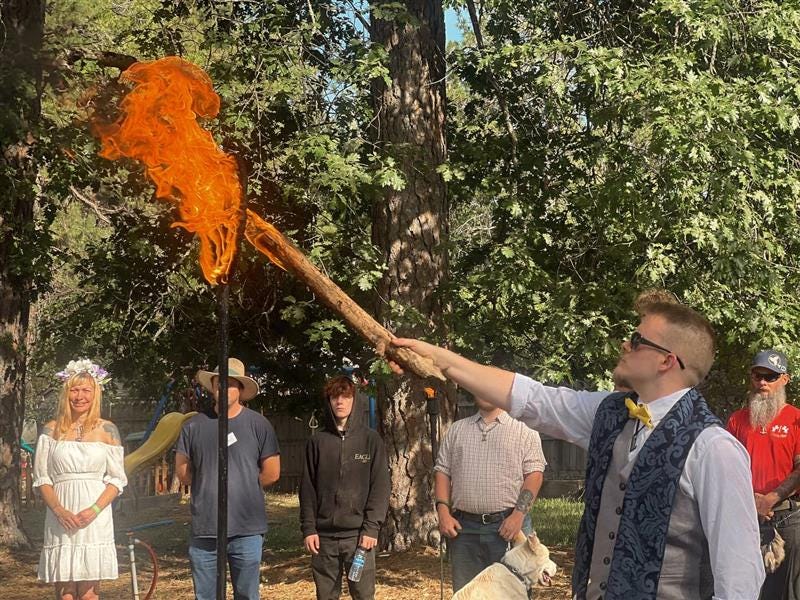
Other ceremonies and rituals may be devised for your own ingenuity. How about a blazing sunwheel? Or a torch ritually carried about the area of the celebration?
Let the spirit of the festival and its eternal sense of wonder fill all that you do, and invite into your soul that fulfillment which has been the lost of those who have followed our faith since time immemorial.
For more about the Ásatrú Folk Assembly, visit our website!
Thanks for reading the Runestone Newsletter! Subscribe, share, and donate to help bring the Folk home.
.